

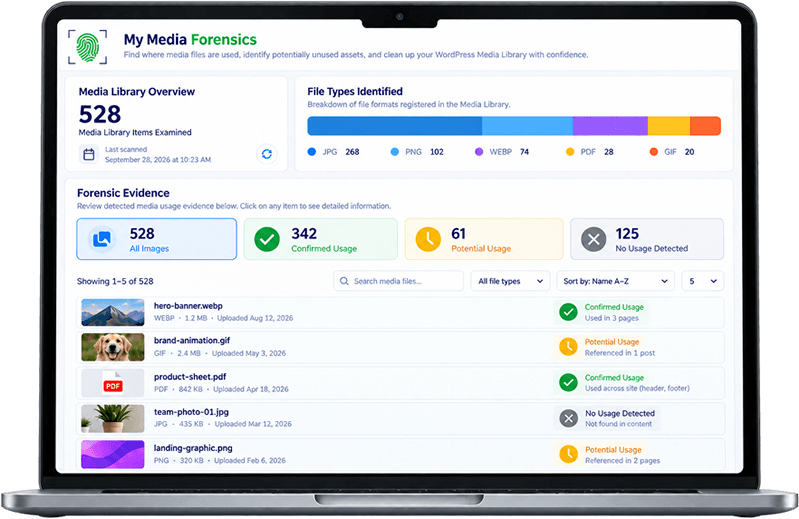
It started with a simple question… is this file actually being used?
It’s a question we found ourselves asking repeatedly while working on website accessibility audits.
As part of that work, we needed to review PDF documents across WordPress websites, determine which ones required accessibility remediation, and provide clients with realistic estimates for the work involved.
That meant understanding not just how many PDFs existed, but which documents were actually being used on the website.
The problem? WordPress wasn’t giving us the information we needed.
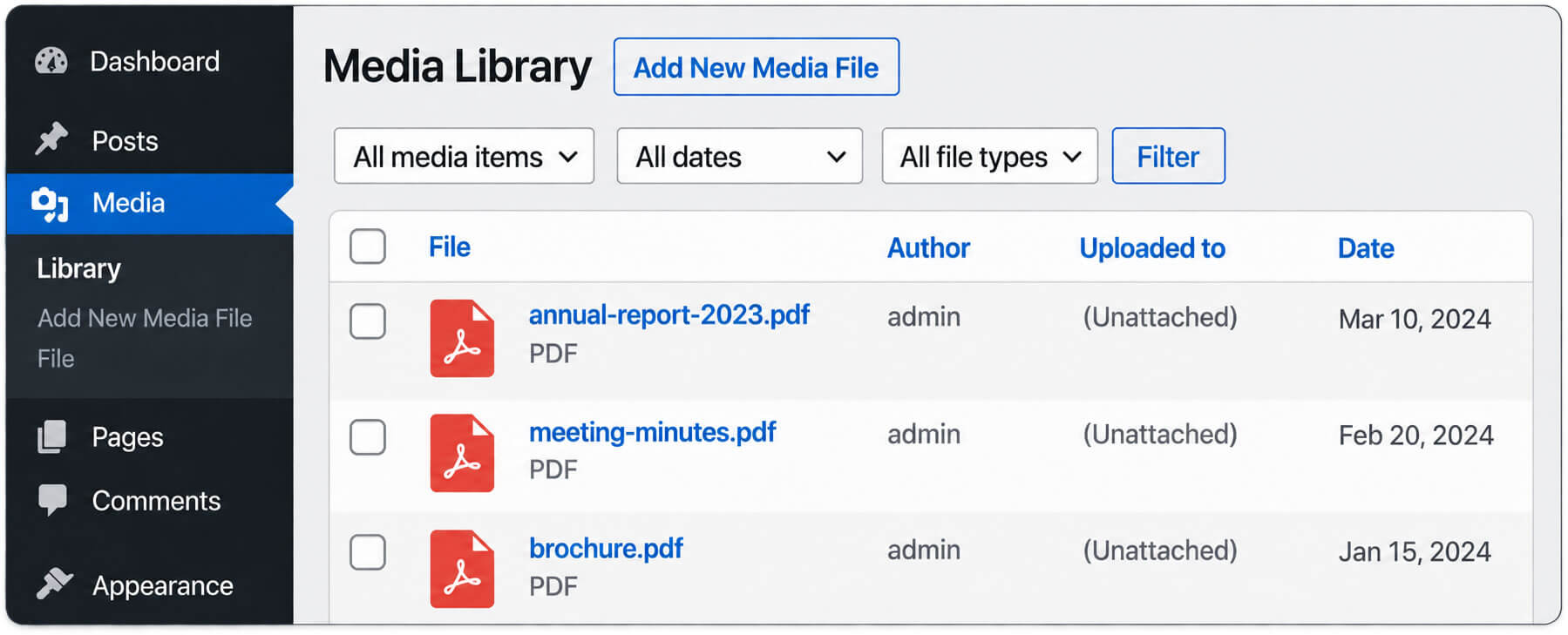
We’d open a Media Library and find dozens, sometimes hundreds, of PDF files. Some were clearly attached to content. Most were labeled Unattached.
Unattached Doesn’t Mean Unused
In WordPress, an attachment’s Unattached status means it isn’t associated with a parent post through its attachment record. It doesn’t mean the file isn’t linked or referenced elsewhere on the website.
A PDF can be actively linked from a page and still appear as Unattached in the Media Library.
The Problem Was Bigger Than a Missing Attachment
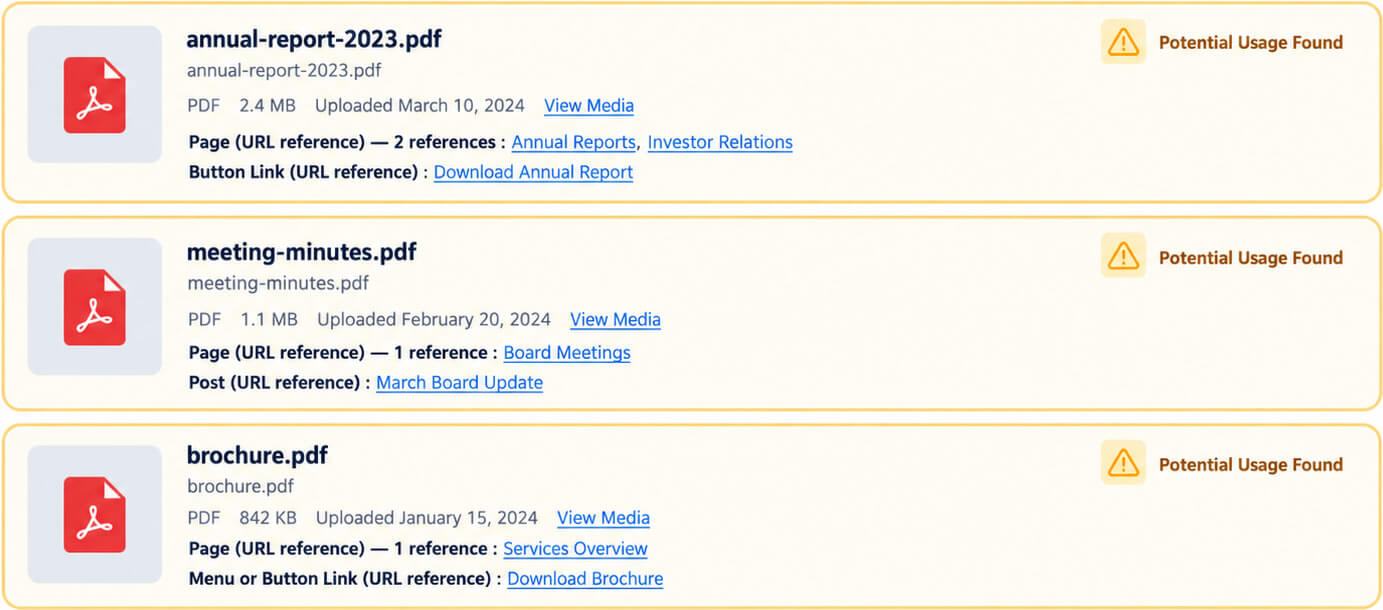
When someone adds a PDF link in WordPress, they don’t necessarily select the document from the Media Library. Often, they copy the file’s URL and paste it directly into a button or link field.
The link works. Visitors can open or download the PDF. Everything appears perfectly normal on the front end. But that action doesn’t necessarily establish the attachment relationship WordPress displays in the Media Library.
So we’d find ourselves staring at lists of supposedly unattached PDFs with no clear indication of where they appeared on the website.
We Needed Evidence, Not Assumptions
Without a clear way to see where files were used, we risked including unnecessary documents in our remediation estimates. We also risked overlooking documents that were actively used but appeared unattached in WordPress.
We wanted to give clients estimates based on a more accurate understanding of their websites, rather than assumptions about the contents of their Media Library.
From Frustration to Forensics
What started as a solution to one recurring workplace problem evolved into something bigger. We built My Media Forensics to provide a more complete picture of the files stored in a WordPress Media Library.
Rather than relying on attachment status alone, the plugin investigates supported areas of a website for media references and presents that information alongside the files themselves. It brings inventory and usage evidence together, making it easier to understand what you have and where it’s being used.
A Better Way to Make Decisions
One of the most important principles behind My Media Forensics is that a file with no detected references isn’t necessarily unused. Files can be accessed through direct URLs, external websites, emails, or locations outside the plugin’s detection coverage.
That’s why we designed the plugin around investigation and evidence rather than automatically deciding which files should be deleted. The goal isn’t to make decisions for you. It’s to give you better information so you can make those decisions with greater confidence.
For our original accessibility challenge, that meant having a clearer starting point for identifying PDFs that needed additional review and estimating the potential scope of remediation. For other WordPress users, the same information can help with media cleanup, content migrations, and general Media Library management.
Built from a Real Problem. Designed for Better Answers.
My Media Forensics wasn’t created because we thought WordPress needed another plugin. It was created because we needed answers that weren’t readily available, and the lack of those answers was affecting real work. What began with a collection of PDFs and a frustrating Unattached label grew into a tool for investigating the files behind a WordPress website.
And that original problem still shapes how we approach the plugin today.
Inventory the files. Investigate the evidence. Make informed decisions.